

How to Be Ruthless When Decluttering Clothes: Practical Tips to Make It Easier
Most of us have experienced it: a closet packed with clothes, yet the feeling of having absolutely nothing to wear. More than a minor inconvenience, this is a symptom of an inefficient system that wastes your time and mental energy getting dressed every single day.
The solution is to get serious about decluttering your clothes. Being ruthless in this context means being decisive, logical, and brutally honest about what you own versus what you actually use. Basically the first step to reclaiming your space and simplifying your life in any area of your home!
This guide provides a clear, actionable system for a ruthless declutter of your wardrobe. We’ll look at the practical benefits that make the effort worthwhile, the mindset required to make quick and effective decisions, and a step-by-step method for purging your closet. Forget sentimentality and procrastination. Let’s declutter your clothes for good!
The Tangible Benefits of a Ruthlessly Decluttered Closet
Before you start pulling every item of clothing from your closet, take a step back and think about the practical results you’re working toward. Sure, you want a tidy closet, but upgrading your daily routine should also be the aim here.
The most immediate benefit is the reduction of decision fatigue. When your closet only contains items you like and that fit you, the process of deciding what to wear is greatly simplified. You thus save valuable mental energy for more important decisions later in the day. A decluttered wardrobe gives you a clear view of your inventory, making it easy to see what you have and what you might still need.
Beyond the mental benefits, there are significant practical advantages. With fewer clothes, you obviously have more physical space. Your closet becomes easier to navigate, and you no longer have to dig through a pile of clothes you don’t wear to find the ones you do. This also means less management: fewer items to launder and check for moths, maybe even fewer runs to the dry cleaner.
Adopt a Ruthless Mindset: The Prerequisite for Decluttering

Successful decluttering has less to do with the physical act of sorting and more to do with your mental approach. Inefficient thought patterns are often one the root causes of clutter in the closet. To be ruthless when decluttering clothing, you have to address these patterns. It’s less of an emotional exercise and more of a logical one.
The most important shift is to focus on your future self, not your past self. The only question that matters is, “Will I realistically wear this again in the foreseeable future?” Who you were, what you did, or what you weighed in the past is pretty much irrelevant data. The clothes in your closet should serve the life you live now and the one you plan to live in the immediate future.
You also need to confront the sunk cost fallacy. Many people keep clothes they don’t wear because they spent good money on them. The truth is, that money is already gone. Keeping an unworn clothing item doesn’t recover the cost; it only adds the new cost of clutter and takes up valuable real estate in your home. Your closet shouldn’t be a museum for past purchasing mistakes. So see this as a practical project to optimise your wardrobe, not a journey of self-discovery. The objective is to get rid of things that no longer serve a function.
How to Prepare for a Tactical Closet Clear-Out
Proper preparation is what separates a successful, ruthless decluttering session from a frustrating afternoon of making messes. Approach this like a tactical operation, not a casual chore. Inefficient, piecemeal efforts may likely be doomed to fail.
First, schedule the operation. Block out a non-negotiable two-to-three-hour time slot on your calendar. You need enough time to finish the job in one go. Trying to declutter for 15 minutes a day has worked for me personally in the past, but for many it will lead to a perpetual state of disorganisation and make it harder to be decisive.
Next, gather your tools. You’ll need three large boxes or bags. Label them clearly: “Keep,” “Donate/Sell,” and “Trash.” Avoid creating a “Maybe” pile. A “maybe” is often just a “no” that you’re procrastinating on. And hesitation is the enemy when you want to be ruthless!
Finally, execute the shock-and-awe method. It’s time to declutter. Take every single clothing item out of your closet, your drawers, and any other storage space. Pile it all onto your bed. Confronting the sheer volume of what you own is a powerful visual motivator.
The Core Method: 7 Steps to Make Decluttering Clothes Faster
With your pile of clothes ready, it’s time to sort. This is the core of the decluttering process. Following a structured method prevents you from getting overwhelmed and ensures you make consistent, logical decisions.
1. Sort by Category
Do not try to tackle the entire mountain of clothing categories at once. Treat it like an assembly-line process instead. The first step is to isolate a single category. Start with something relatively easy, like t-shirts or jeans. Process that entire category before moving on to the next. This creates momentum and gives you a sense of accomplishment early on, and it’ll be easier to continue when you get to more difficult categories like special occasion clothes.



2. Use a Strict Questioning Protocol
For each item, ask yourself a series of direct, non-negotiable questions:
- Does this fit my body today? This is not a hypothetical question. If you’re unsure, physically try the item on. If the pants don’t button or the dress is too tight, the decision is made for you. Don’t keep clothes for a “someday” body; that’s a recipe for clutter and guilt.
- Have I worn this in the last 12 months? If the answer is no, the objective evidence shows you are unlikely to wear it again in the coming year. Be honest with yourself about your habits. If you haven’t reached for it in four seasons, it really might not be a valuable part of your wardrobe.
- Is it in good condition? Look for permanent stains, pilling, stretched-out elastic, or rips that you know you will never repair. Don’t keep project pieces or items in good condition that you simply never wear.
- Does it fit my current life? If you now work from home like I do, a closet full of corporate clothes for the office is dead weight. Keep your best two or three outfits for the occasional real-life meeting, and let the rest go. Your wardrobe needs to reflect the life you actually live, not one you used to have!
3. Eliminate the “Maybe” Pile
To reiterate, a “maybe” is a “no.” If you have to spend more than a few seconds deliberating on an item, it probably means you don’t love it and don’t need it. Or that it doesn’t fit but you’re hanging on to it because it was expensive. But keeping it only adds to the clutter. And the goal of ruthless decluttering is to make decisions quickly and confidently. So if it’s not a wholehearted immediate “yes,” it’s a “no.”
4. Discard “Just in Case” Items
The “just in case” trap is one of the biggest causes of clutter in general. We keep old clothes for painting, a bunch of clothes for a hypothetical vacation, or outfits for events that are not on our calendar. Yet “just in case” scenarios rarely happen, and keeping a wardrobe for them is an inefficient use of space. In the rare event you need clothes for a specific, one-off activity, you can likely borrow from a friend or purchase what you need. Or even rent an outfit!
5. The Reverse Hanger System for Ongoing Decluttering
Once your initial purge is complete, this trick will help you maintain your decluttered closet. When you put your “Keep” items back, hang them all with the hangers facing the wrong way. After you wear an item, return it to the closet with the hanger facing the correct way. In six months, you’ll have undeniable, visual data on what you actually wear and what you don’t. This makes the next round of decluttering purely data-driven. I love this trick!



6. Think Like a Minimalist (Even if You Aren’t One)
You don’t have to adopt a full-blown minimalist lifestyle, but the principles behind a capsule wardrobe are ruthlessly efficient. A capsule wardrobe is a small collection of essential, versatile items that can be mixed and matched. Adopting this mindset helps you focus on quality over quantity. Every item you decide to keep should be functional and work with other items in your closet. An item that can only be worn in one specific outfit is a weak link.
7. Stop Agonising Over Style
Deep down, you already know what you like and what makes you feel good. If you pick up an item and your immediate reaction isn’t positive, out it goes. Don’t invent future scenarios where you might suddenly want to wear it. Trust your gut. Clothes that make you feel anything less than confident are not earning their spot in your closet. The KonMari Method suggests asking if an item “sparks joy,” but a more direct approach here is to ask if you feel good in it.

A Logical Framework for Hard-to-Declutter Clothes
Inevitably, you will encounter a few items that cause you to pause. This hesitation is rarely about the item’s function as clothing; it’s usually tied to a perception of value, whether monetary or emotional. Use the below framework to process these hard-to-declutter clothes logically.

Sentimental Items
It helps to keep in mind that a “thing” is not a memory. The memory exists in your mind, and it will continue to exist even after the physical object is gone. If you have an old t-shirt from college that you never wear, its function as clothing is over. It is now officially clutter. If you must preserve the memory, take a photograph of it, and then let the garment go. Don’t allow your closet to become a storage unit for sentimental items.
Expensive Items
This brings us back to the sunk cost fallacy. The item’s price tag has zero bearing on its future utility. Whether an item cost $20 or $500, if you don’t wear it, its value to you is now $0! In fact, by keeping it, you are losing out on the potential to recover some of the cost by selling it. The money is spent! Keeping the item will not bring it back, but it will continue to make you feel guilty. Your best financial and spatial option is to sell or donate it.
Gifted Items
The purpose of a gift is fulfilled the moment it is given and received. You are not under any obligation to serve as a long-term storage facility for other people’s purchasing decisions. If an item of clothing you received as a gift doesn’t fit, doesn’t suit your style, or is something you will never wear, you can get rid of it without guilt.
Post-Declutter Strategy: Organisation and Prevention
Once you’ve sorted through everything, the only clothes that should be allowed back into your closet are the ones from your “Keep” pile. This is non-negotiable. Everything in the “Donate/Sell” and “Trash” piles should ideally be removed from your home within 48 hours. Don’t let them linger in the hallway or the trunk of your car; that’s simply transferring clutter from one location to another.

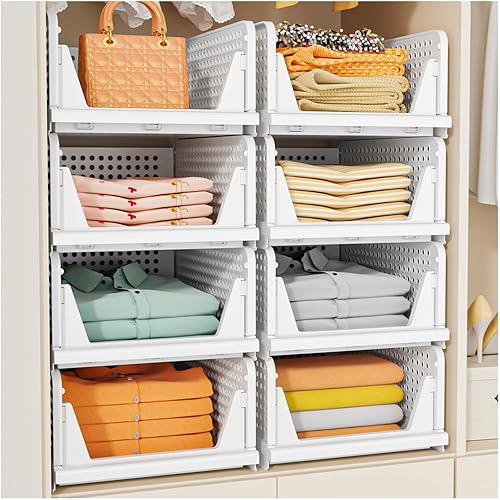


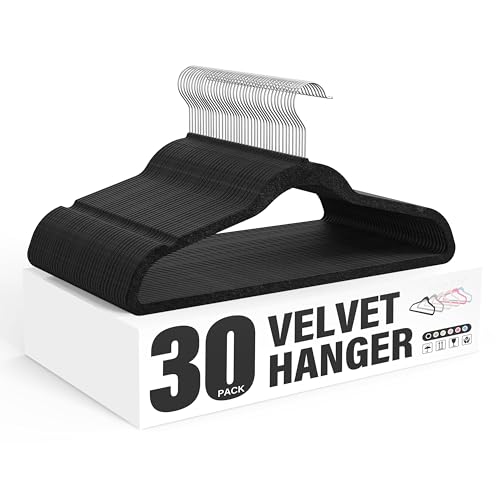
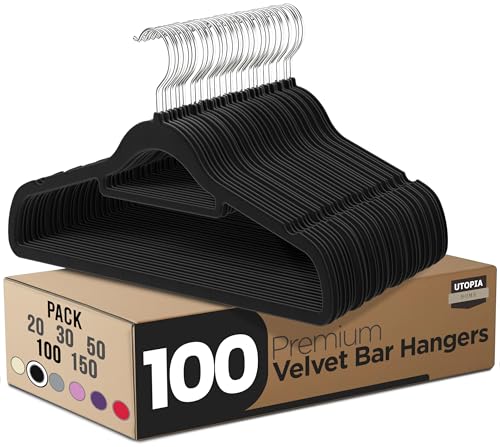
When organising the clothes you’re keeping, aim for functionality. Use matching hangers to create a clean, uniform look. Group all like items together—all pants in one section, all shirts in another and so on. This allows you to see your entire inventory at a glance, so it’ll be easier to get dressed. It also helps prevent you from buying duplicates.
Getting rid of those items you don’t need is the hard part; putting away what’s left is your reward. I always find it really satisfying.
Maintaining a Decluttered Wardrobe for Good
You’ve done the hard work of removing clothes you no longer need. Now, the final step is to make certain you don’t undo that progress. Decluttering is not a one-time project after all; it’s a continuous system of inventory management for your wardrobe. The goal is to keep your closet as a curated space that contains only functional, relevant items that you want to wear.
The most effective way to do this is to adopt a strict “one in, one out” policy. Every time you bring new clothes into your home, an equal number of items must leave. This forces you to be way more intentional with your purchases and prevents the slow accumulation of more stuff. When it comes to decluttering, this simple habit alone is one of the best decluttering tips for long-term success. In any area of your home!
Ultimately, a ruthlessly decluttered wardrobe is about efficiency and creating a simplified environment where your belongings serve you, not the other way around. By being decisive and logical, you create a functional wardrobe that saves you time and mental energy every single day, so that you can focus on things that are far more important than deciding what to wear.



Leave a Reply