
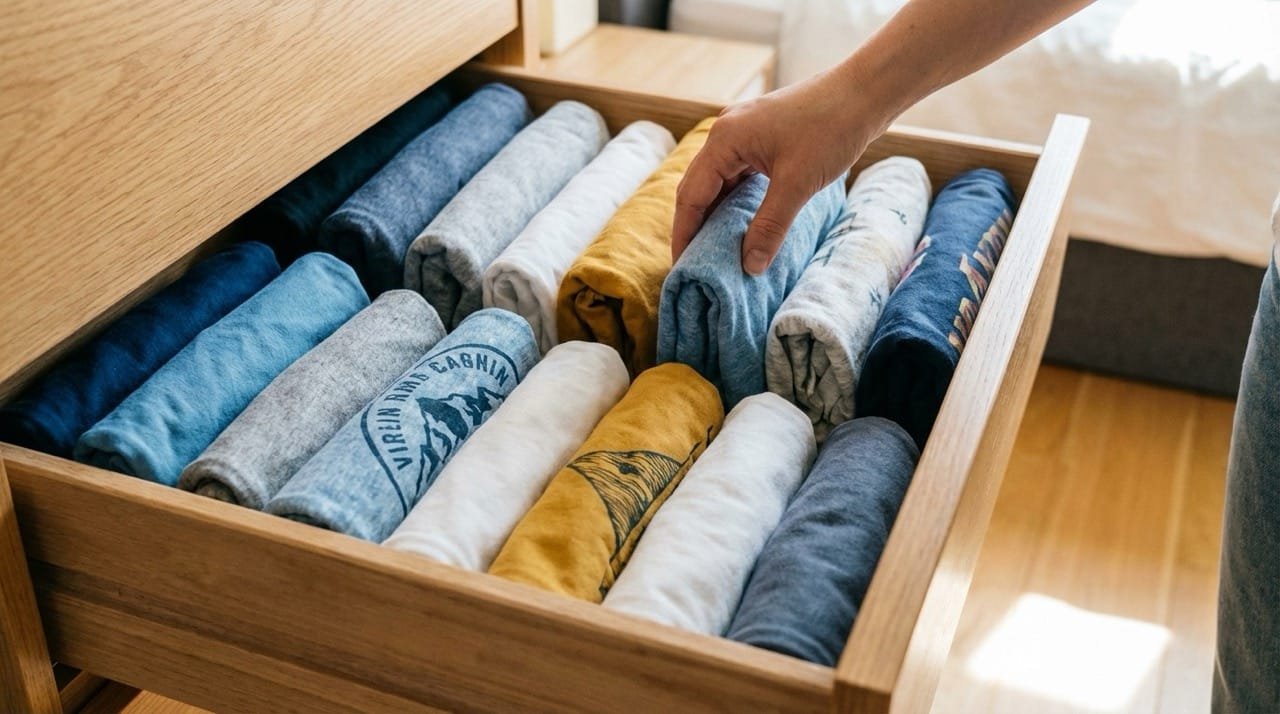
I used to be sceptical about specific folding techniques. It seemed like a lot of effort just to put laundry away. Whatever, right?
But living in an apartment with limited storage means I have to be smart about every inch of space. I don’t actually have a proper dresser, which complicates things. For anything that doesn’t get hung up, I rely on shelves and organizing bins inside the closet. The standard way of piling clothes wasn’t working too great though; things kept getting lost in the shuffle.
After reading her infamous book on tidying way back in 2014, I decided to try Marie Kondo folding, not necessarily to “spark joy” every time I touched a t-shirt, but just to reclaim some of my closet space. The results were immediate! By switching to the KonMari method, I could suddenly see every single item I owned without digging through a messy stack.
If you want to stop wrestling with overflowing bins, here’s why I swear by this technique and how to do it. It’s ridiculously easy.
Summarise this Post with AI:
 ChatGPT
Why the KonMari Folding Method Works
As you already gathered, the core philosophy behind Marie Kondo folding is visibility. When you stack clothes on top of each other in a bin or on a shelf, the items at the bottom get crushed. Plus, you’ll often end up wearing the same three shirts at the top of the pile because stuff gets buried underneath.
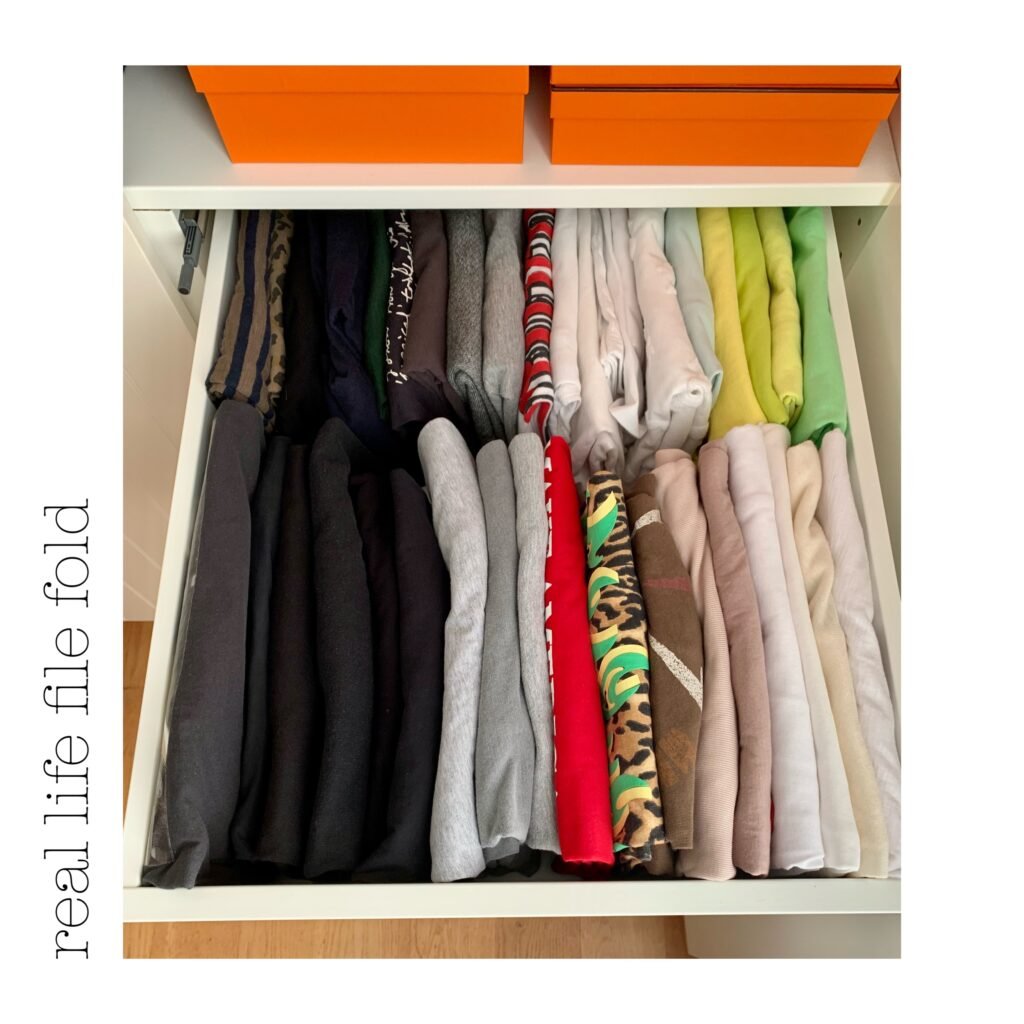
Using the KonMari method, you store items vertically. This allows you to see everything at a glance. It also prevents the weight of the pile from pressing down, which leaves your clothes less wrinkled than they would be in a standard stack. It’s simply a smarter method of folding for anyone with limited storage solutions. And who doesn’t like less ironing, amiright?!
The Basic Folding Technique: Making a Rectangle
Whether you’re folding a blouse, a pair of jeans, or a sweater, the goal is always the same: create a smooth rectangle.
Marie Kondo suggests using the palms of your hands to smooth the fabric as you fold. This communicates affection for the item (a key part of the esotericism behind Kondo tidying), but practically speaking and for our intents and purposes here, it flattens the garment so it takes up less space.
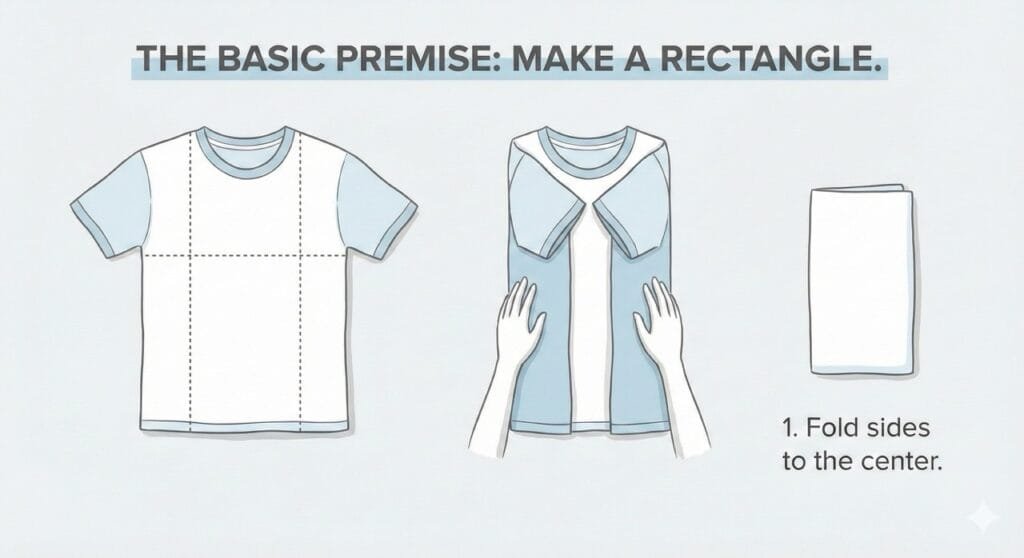
Once you create a rectangle, you fold the item in half or into thirds until it’s able to stand on its own. If it flops over, the rectangle is too loose or the height is wrong. It takes a little practice, but once your clothes are folded correctly, they pretty much stay put.
How-To: File Folding Clothes (T-Shirts and Jeans)
Folding t-shirts and denim is where you’ll see the biggest space savings. Despite all my closet decluttering challenges over the past few years, I still have a LOT of jeans and tees. Since I store my clothes in open bins on a shelf, file folding clothes is the only way to keep them from turning into a jumbled mess.
Here’s the step-by-step how-to for folding clothes like tees:
- Lay the shirt flat in front of you.
- Fold one side toward the centre. Fold the sleeve back to create a straight line.
- Repeat on the other side to make a long rectangle.
- Fold the top down toward the bottom, leaving a little extra space at the hem.
- Fold the item into a third or half again, depending on the height of your bin or drawer.
For jeans, the process is similar. You fold one leg over the other, tuck in the crotch to make a straight line, and then fold up from the bottom.
Marie Kondo Folding for Storing Long-Sleeves and Polo Necks
Winter gear can be tricky. I used to struggle with bulky items, but Marie Kondo folding works great for long-sleeve shirts and polo necks too.
For a polo neck, simply fold the neck part down into the body of the shirt first. Then, proceed with the standard method to create your rectangle. This prevents the neck from adding too much bulk at one end. When folding and stacking these items vertically, they look incredibly neat.
Folding Socks and Underwear the KonMari Way
This is the part that usually gets people talking. Marie Kondo’s advice for socks forbids tying them into balls. She says balled socks are “always in a state of tension,” which stretches the elastic.
For folding socks, lay one sock on top of the other. Fold the toe inward about an inch from the top. Fold into a third or half so it stands up. For socks and underwear, the goal is a small, tidy packet.
Even socks deserve to be treated well. Plus, seeing rows of folded socks in a little container is much nicer than digging through a “sock bucket.”
Making These Organisation Ideas Stick
Marie Kondo’s bestselling book, The Life-Changing Magic of Tidying, focuses heavily on decluttering first. In a nutshell, she says to discard what you don’t need before you start organising. Once you’ve pared down, this folding technique is a fantastic way to maintain order in the closet or your dresser.
Marie’s approach might seem specific, but folding everything into a neat package makes getting ready in the morning much more stress-free. Your clothes are ready to wear, neatly arranged, and easy to find at a glance.
Give Marie Kondo folding a try for just one week! Even if you don’t have standard dresser drawers and use shelves like me, I suspect that once you see your closet looking this good, you won’t go back to the old way of stacking clothing.



Leave a Reply