

Let’s be fair: most of us treat our home like a pit stop from Monday to Friday. We crash there after work, dropping our keys on the counter before we muddle through dinner and land on the couch to scroll our phone. The way we interact with our living space has a profound impact on our mental state though.
We tend to overcomplicate the idea of being mindful. Thinking it requires a coach, hour-long sessions, incense, or specialised retreats where you break into small groups to “share feelings and thoughts” (oh the horror). In reality, a mindfulness practice is simply the act of bringing your attention to the present moment. Noticing what you’re doing while you’re doing it, ideally without judgment.
I want to share 10 simple mindfulness exercises that blend traditional techniques with the practical realities of maintaining a home. These mindfulness activities are designed to reduce stress, help you focus your attention, and turn mundane chores into moments of calm.
➡ Table of Contents
Practice Mindfulness to Calm Your Mind
To practice mindfulness your brain has to be trained to stay in the here and now. It sounds simple, but if you’ve ever driven home and realised you were on autopilot and don’t remember the drive, you know how easily the mind wanders.
A systematic review of psychological research suggests that regular mindfulness practice can significantly help reduce stress and improve emotional regulation. When we make mindfulness a habit, we stop reacting automatically to triggers and start responding with intention.
You don’t need to be a monk to benefit from mindfulness! Whether you’re brushing your teeth or organising a drawer, any action can become meditation if done with full awareness. The goal isn’t to empty your mind; it’s to notice when you’ve drifted and gently bring your own attention back to the present in the moment.
How Your Home Benefits From a Mindfulness Practice
For those of us focused on intentional living, decluttering and minimalism, mindfulness and meditation are actually great tools for maintenance. A cluttered mind often leads to a cluttered home. When we rush through our daily routine, mail easily piles up on the kitchen counter, clothes stack up on the bedroom chair, and a handbag turns into a dumping ground for receipts and gum wrappers.
By integrating simple mindfulness exercises into your domestic life, you create a recursive feedback loop. A tidy home calms the mind, and a calm mind maintains a tidy home. Mindfulness helps us pause before we buy things we don’t need, and it helps us appreciate the items we choose to keep.
10 Easy Mindfulness Activities for Adults
Here are ten ways to calm your mind, from a traditional guided meditation to practical home tasks. You don’t need any equipment for these easy mindfulness exercises other than your own attention span.
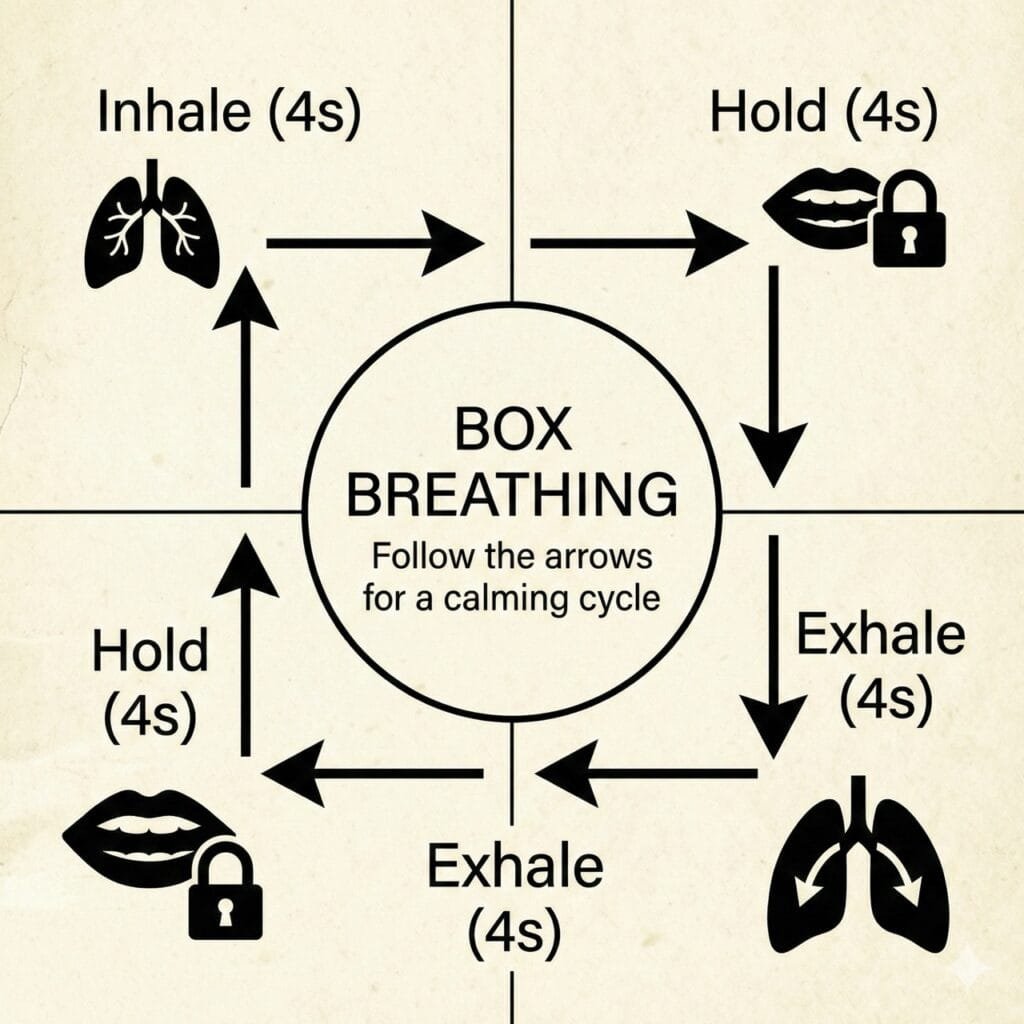
1. The 5-Minute Mindfulness Exercise: “Box Breathing” Reset
This is a classic mindfulness exercise used by everyone from yogis to Navy SEALs to calm the nervous system. It’s the perfect simple exercise to switch gears when you first walk through your front door after work.
- Sit in a comfortable chair or lie down in a comfortable spot.
- Close your eyes and take a deep breath in through your nose for a count of four.
- Hold the breath for a count of four.
- Exhale slowly through your mouth for a count of four.
- Hold the empty breath for a count of four.
This regulates your breath and signals to your body that you are safe. If you find it difficult to focus alone, using a video can help. Here is a great 5-minute mindfulness video to guide you:
2. The Domestic Body Scan
A traditional body scan involves mentally checking in with every part of your body. I like to turn this into a body scan meditation that transitions into a sort of “room scan.”
- Start by getting into a comfortable position. You can sit or lie down. I usually just stay seated and let my shoulders drop.
- Bring your attention to the sensations in your feet, then move up to your legs, torso, and shoulders.
- Notice any tension and visualise it leaving as you exhale.
- Once you feel grounded, open your eyes and scan your room. Don’t look for mess to clean. Just notice the light, the shadows, and the colors. This bridges the gap between mind and body and your environment.
3. The 5-4-3-2-1 Grounding Technique
When anxiety hits, this is one of the most effective mindfulness tools to snap you back to the present moment. It engages the five senses.
- Five things: Acknowledge five things you can see around you (e.g., the grain of the wood floor, a plant).
- Four things: Acknowledge four things you can touch (e.g., the texture of your sweater, the cool table surface).
- Three things: Acknowledge three things you can hear.
- Two things: Acknowledge two things you can smell.
- One thing: Acknowledge one thing you can taste.
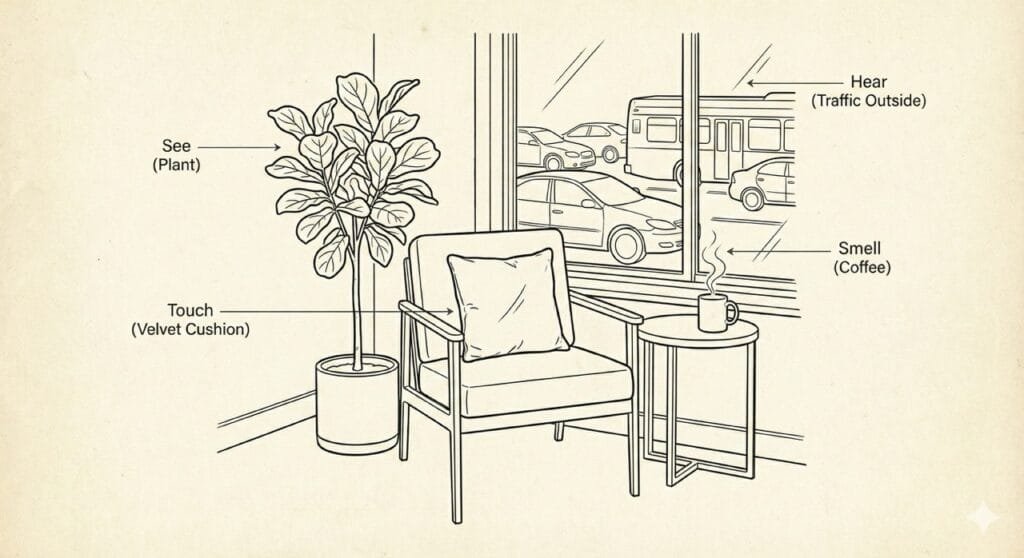
I find this really helpful in halting an acute stress spiral.
4. Mindful Coffee (or Tea) Ritual
Mindful eating and drinking are super powerful because they turn a biological necessity into a mindfulness practice. Instead of scrolling through emails while you drink your morning coffee, commit to doing nothing else but actually drinking your coffee. Sound crazy?
- Feel the warmth of the mug in your hands (sensation).
- Smell the aroma.
- Take a sip and pay attention to the temperature and flavor.
- Feel the liquid swallowing.
Try it out! This daily routine can genuinely help set a tone of intention and greater relaxation for the rest of the day.
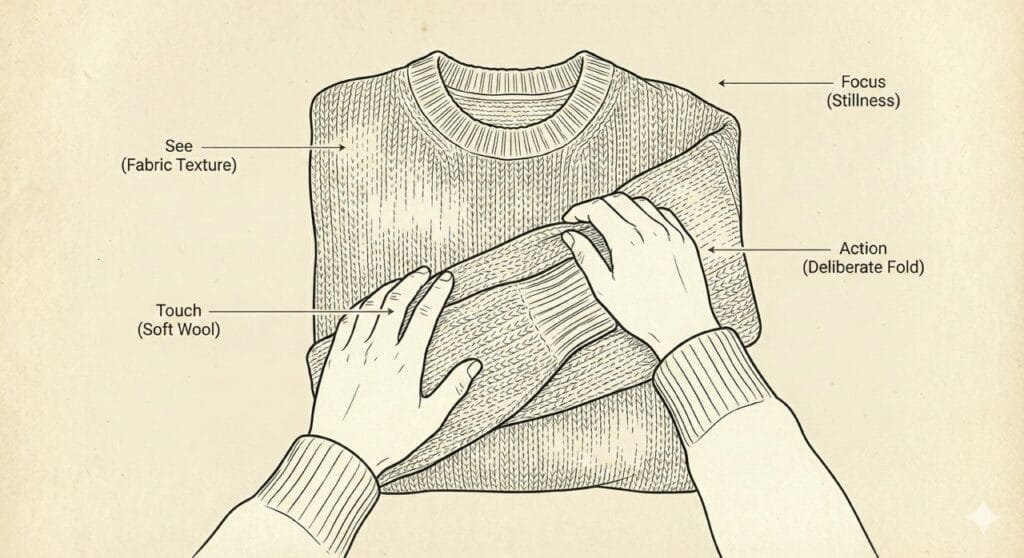
5. The “Laundry Folding” Meditation
Chores are usually mindless. Or are they? Folding laundry is a rather mundane, repetitive task, and that makes it perfect for mindfulness meditation.
- Pick up an item. Feel the fabric and notice the physical sensations it brings to your awareness. Is it rough or soft? Warm or cool?
- As you fold, focus entirely on the movement of your hands.
- If your mind wanders to your to-do list, gently bring your attention back to the fold.
PRO Tip
Use the Marie Kondo folding method to save loads of space in your closet and dresser!
6. Mindful Walking (The “Tidy” Walk)
Walking meditation is usually done outdoors, but you can practice mindful walking in your hallway or living room as part of your everyday mindfulness activities. In a small apartment, this might look like a “reset walk.”
- Walk slowly from one end of your room to the other.
- Pay attention to sensations like your feet touching the floor.
- Coordinate your steps with your breath.
- If you see an item out of place, pause. Pick it up mindfully, feel its weight, and place it where it belongs.
7. The “Single-Task” Dishwashing
Thich Nhat Hanh, a renowned Zen master, famously taught mindfulness through washing dishes. He argued that you should wash the dishes not to get them done, but just for the sake of washing the dishes.
- Feel the warm water and the soap.
- Listen to the sound of the water.
- Focus on the circular motion of scrubbing.
- Focus on your breathing as you rinse.


8. The “One-Minute” Declutter Pause
Before you begin a large organising project, try this quick exercise. Stand in the center of a room. Close your eyes. Take a moment to ask yourself how the space feels.
- Inhale deeply, visualising clarity.
- Exhale, releasing the need for perfection.
- Open your eyes and choose one item to put away. Just one.
This prevents overwhelm and anchors you in the present moment.
9. Mindful Brushing
We often brush our teeth while thinking about tomorrow’s meetings and to-do list. Try this instead as your anchor:
- Feel the bristles against your gums.
- Taste the mint.
- Listen to the sound of the brushing.
Focus on cleaning on quadrant of your mouth at a time, for 30 seconds. By the time you finish brushing your teeth, you’ll have completed a two-minute mindfulness session.
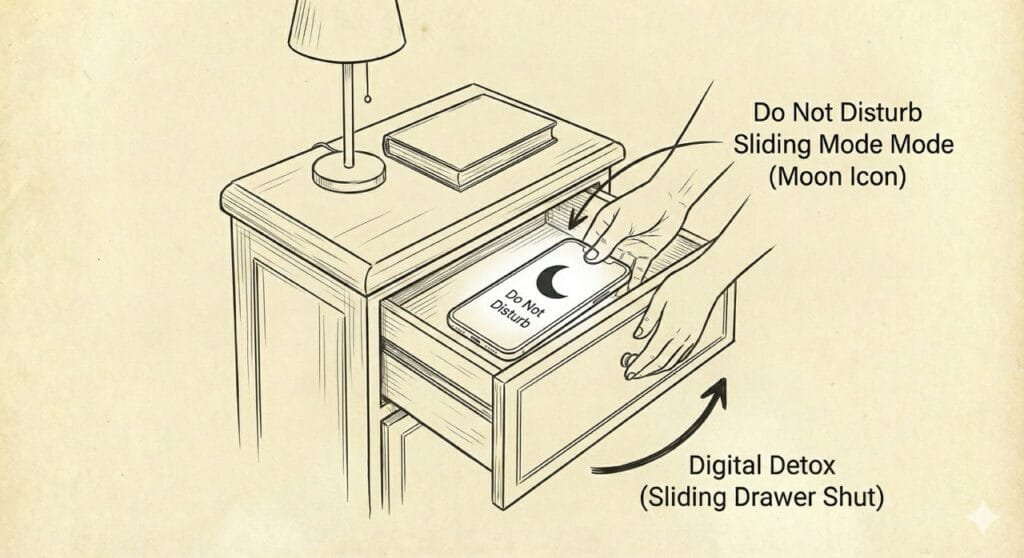
10. The Digital Sunset
Mindfulness becomes difficult when we’re bombarded by notifications. A “digital sunset” is where you mindfully turn off devices an hour before bed. It’s a relaxing way to prepare your body and mind for sleep.
- As you plug in your phone to charge, acknowledge that the day is done.
- Use this time for journaling or a brief body scan.
Making Mindfulness Part of Your Daily Routine
Starting a mindfulness journey doesn’t require a massive lifestyle overhaul, just small, consistent shifts. The benefits of mindfulness–reducing stress and improving focus–accumulate over time.
I started practicing mindfulness by choosing just one of the easy mindfulness activities listed above. It doesn’t matter if you start with some breath work before dinner, or the mindful coffee in the morning.
Mindfulness has become a buzzword, but it really just revolves around reclaiming attention. In a world designed to distract us, choosing to focus on the sensation of breathing or the texture of a folded shirt is a pretty radical act of self-care.
When you put your feet up or get into bed tonight, take a second to notice the air moving in and out of your body. Notice the support of the mattress and how it feels beneath your shoulders, your back, your hips. Focus your attention on gratitude for the shelter you have. That’s mindfulness. It’s simple, free, and always available.
If you’re ever doing an exercise and find yourself getting frustrated or distracted, just come back to your exercise and breathing. There’s no “perfect” way to do this. As they say, the key is consistency.





Leave a Reply