

Tripping over shoes in your hallway again? In small homes and flats, shoe clutter multiplies fast and the usual “just throw ’em in the closet” approach stops working around pair number five. The real challenge isn’t even storing your shoes. It’s tough coming up with a system where you can actually see what you own and grab the pair you need, when you need it.
The good news: small spaces don’t mean sacrificing organisation. With the right storage solutions, you can keep your entire collection accessible, visible, and out from underfoot—even in a studio flat or small apartment.
Before You Organise: Take Inventory and Declutter Your Shoe Collection
Before you buy a single container or rack, take inventory of the footwear you own. Pull out every pair of shoes, trainers, boots, slippers, sandals, slides, you name it—from the back of the closet, under the bed, the front hallway and wherever else they’re hiding.

Seeing all of your kicks in one place gives you a realistic picture of your collection. Plus, this is a fantastic opportunity to weed out any pairs that are on their last leg or yucky, in addition to any that need to go the cobbler for repair.
Be honest with yourself about what you actually wear, too. If a pair of shoes hasn’t been worn in over a year or doesn’t fit properly and kills your feet, it’s time to let ’em go.
This step of sorting through what you’ve got makes a huge difference already, as having fewer items is the easiest way to keep a space organised. Once you know exactly what you’re keeping, you can figure out the type of shoe storage you need.
The Classic Shoe Rack: A Versatile Organiser for Any Space
There’s a reason the classic shoe rack is so popular: it’s simple, effective, and comes in countless styles. For frequently worn shoes, a small rack near the entrance is an obvious designated spot for day-to-day trainers and casual shoes.


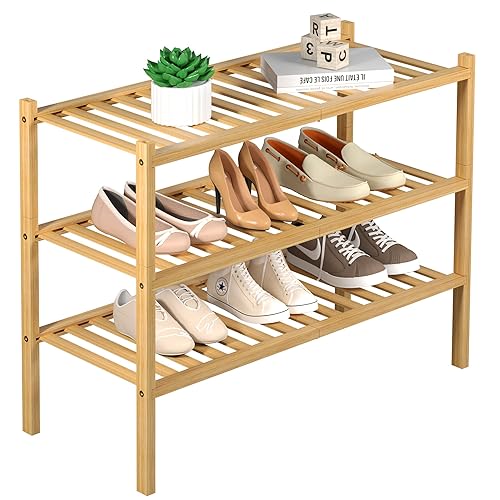
A good shoe rack doesn’t have to take up much space. Look for slim, tiered designs that build upwards. A stackable shoe rack is an excellent option for limited closet space, too, as you can add another layer if your collection grows. This type of rack also allows air to circulate, which is great for leather shoes that need to breathe.
Maximising Vertical Space: Over-the-Door & Hanging Shoe Organisers
When floor space is limited, the best way to organise shoes is to go vertical. Over-the-door shoe organisers are fantastic for this. They use the underutilised space on the back of a bedroom or closet door to neatly accommodate shoes without taking up a single square inch of the floor. Many hanging shoe organisers can hold quite a lot of shoes, with some designs built for up to 30 pairs of shoes.


These are particularly suited for flats, sandals, and other low-profile shoes. The clear pockets on many over-the-door models make it easy to find the pair you want at a glance.
For shoes in your closet, a hanging shoe organiser that fits on the closet rod is another smart choice for tight spaces where a bulky rack or cabinet won’t fit.
The Shoe Cabinet: My Best Way to Organise Shoes
If you prefer a cleaner, more minimalist aesthetic, a shoe cabinet is the perfect solution when space permits. Unlike an open rack, a shoe cabinet conceals your footwear behind closed doors, instantly making a space feel less cluttered. This is an excellent way to store shoes in a hallway or living area without disrupting the decor.
Many modern cabinet designs are incredibly slim and sit flush against the wall, giving you lots of storage without a large footprint. IKEA offers several popular and affordable options that are specifically designed for small homes. I chose the Bestå cabinet for my own shoe organisation, and as a bonus, it even houses my hoover out of sight!


What I also like about a shoe cupboard is that it can blend in seamlessly with other furniture, and it does a marvelous job protecting your shoes from dust. While it takes up more space than an over-the-door organiser, a dedicated shoe cabinet offers a permanent and tidy place to store shoes. If you have the space, this is my favourite option.

Other Creative Ways to Store Shoes Without a Traditional Rack
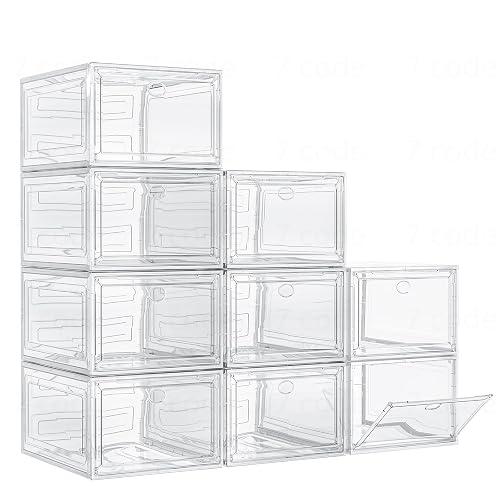
Beyond the standard options, there are plenty of other ways to store your shoes. One of the best storage solutions I’ve found is using clear, stackable shoe boxes. Unlike the cardboard boxes shoe brands provide, plastic shoe boxes let you see what’s inside, so you can find the pair you need without unstacking everything. You can stack them on the top shelf of your closet or create a neat tower in the corner. This method is perfect for keeping shoes you don’t wear often, like seasonal shoes and boots, in pristine condition.



For flat shoes like ballerinas or sandals, a deep drawer in a dresser can be repurposed for shoe storage. You can use simple dividers to keep pairs together.
Another idea is to use cubbies. Whether it’s a dedicated shoe cubby unit or a repurposed bookshelf, placing shoes in individual compartments keeps them organised and easy to access. I had a very skinny, awkward space in between my main wardrobe and the wall, so I had a handyman custom-fit some cubbies for me to store my boots. We used elements from the Ikea Pax system, and it wasn’t expensive at all! Here’s what it looks like:

Tips and Tricks for Keeping Your Shoe Collection Tidy
Once you have your system down pat, the key to keeping everything in order is maintenance. Here are a few tips and tricks to keep your collection organised.
First, practice the “one in, one out” rule. If you buy a new pair of shoes, let one go. This prevents your collection from growing beyond your available storage space. Second, designate zones. Keep your most frequently worn shoes in the most accessible place, like a rack by the door. Less-worn pairs, like formal heels or ankle boots, can be stored in boxes on a higher shelf. For tall boots, use boot shapers or inserts to help them stand upright. This saves space and preserves their shape.
Finally, make putting them away part of your routine. It only takes a minute to place shoes back on the rack or in their box, but this small habit prevents the pile-up that leads to clutter.





Leave a Reply